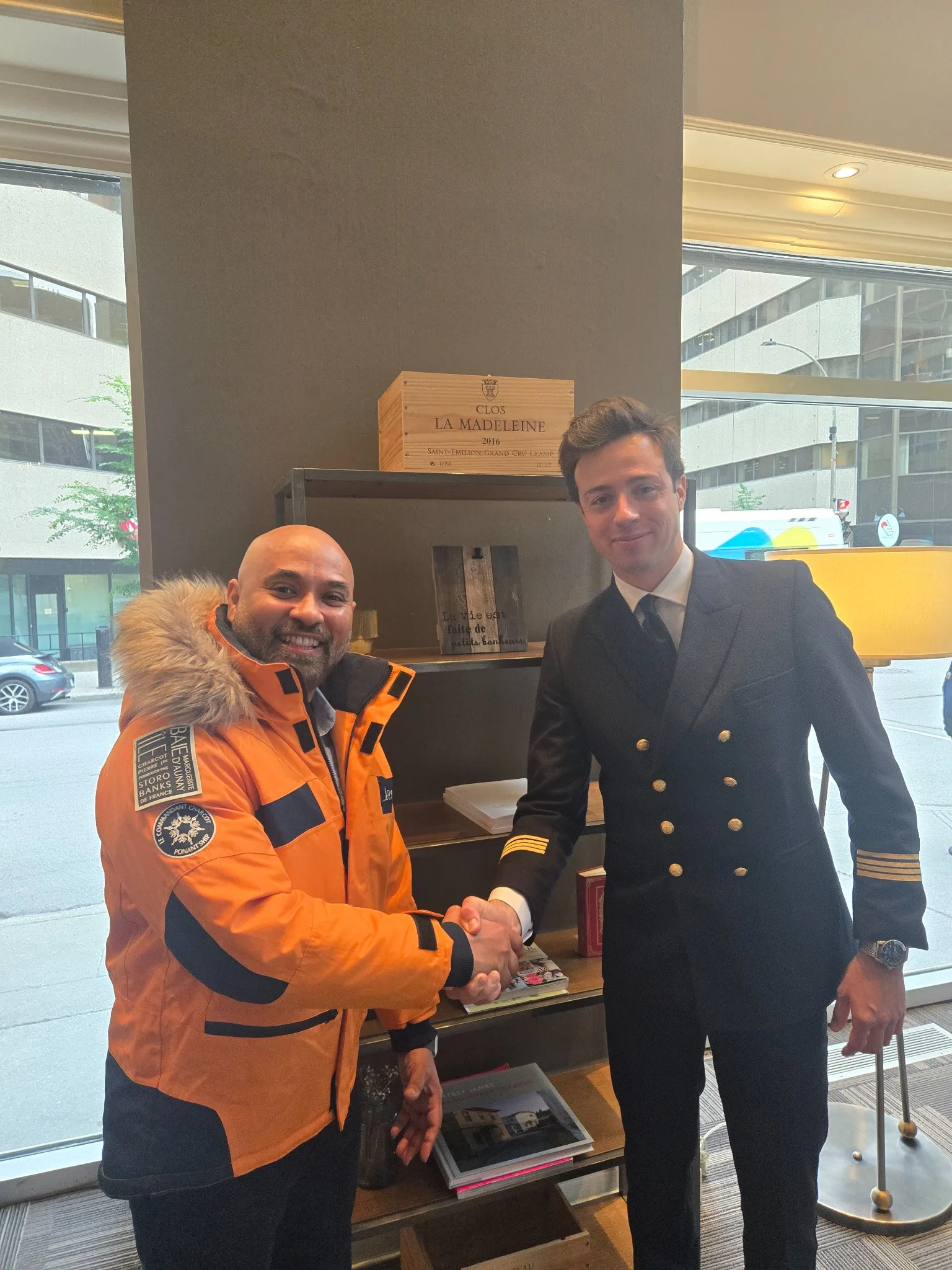
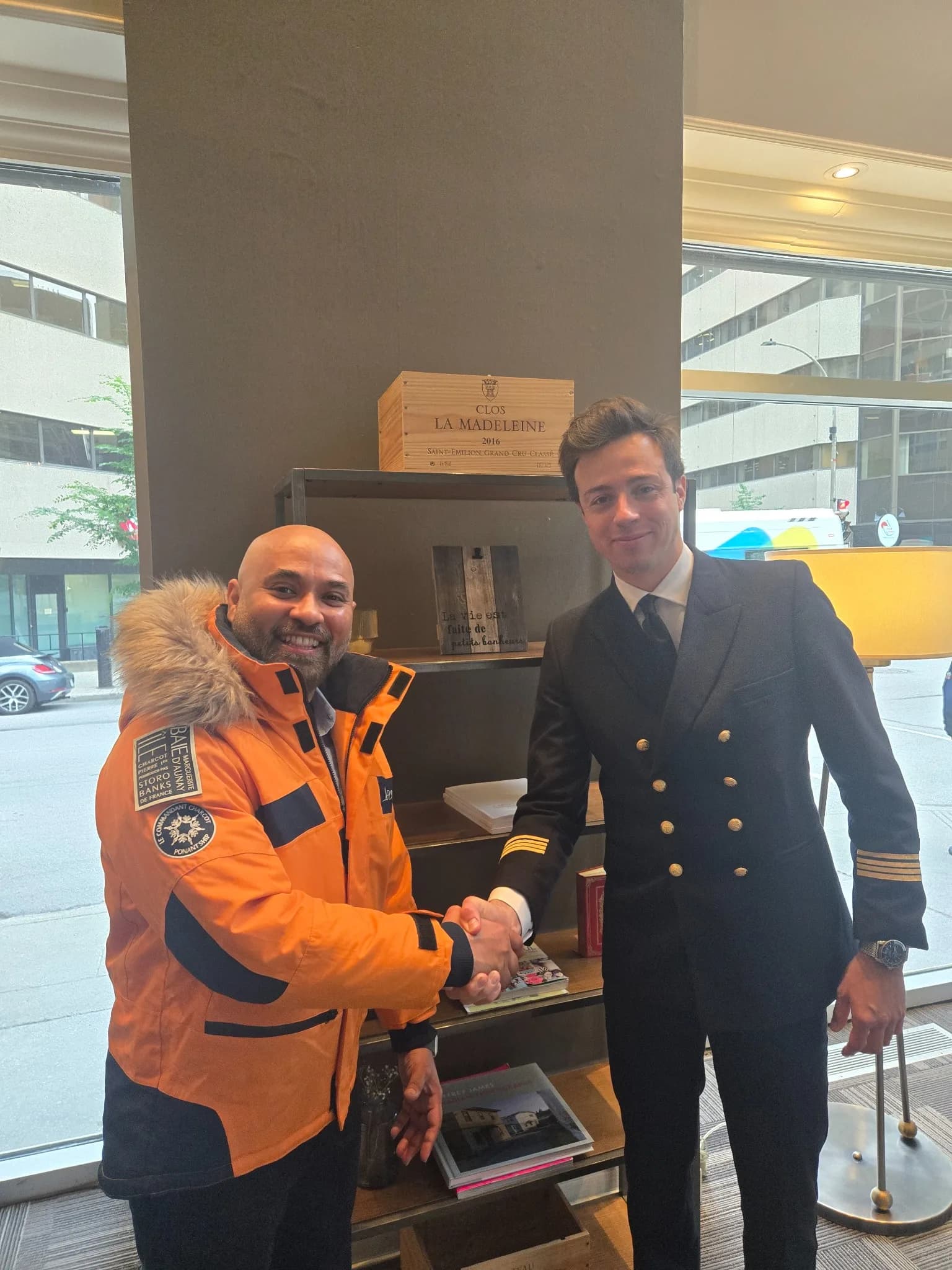
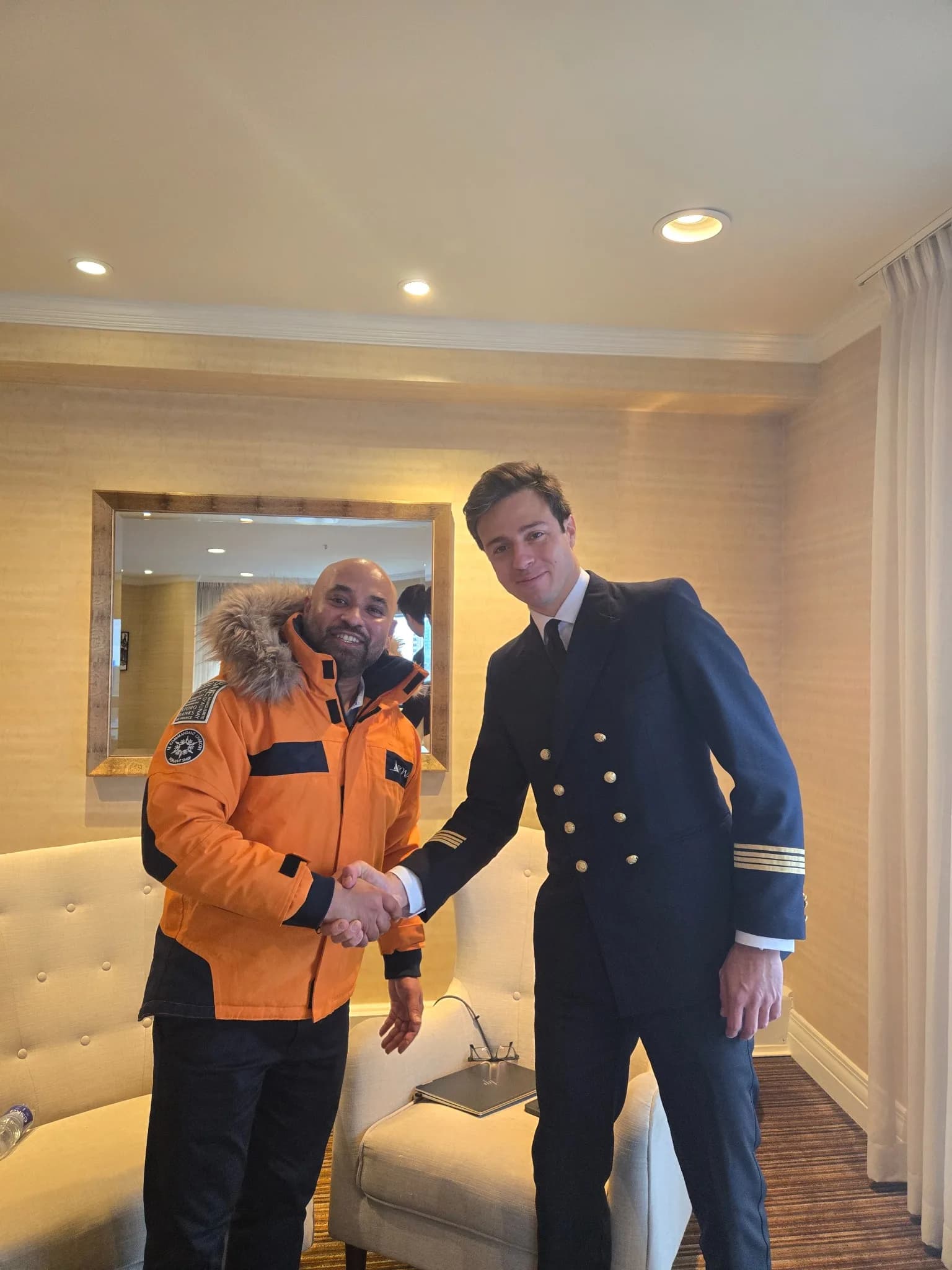
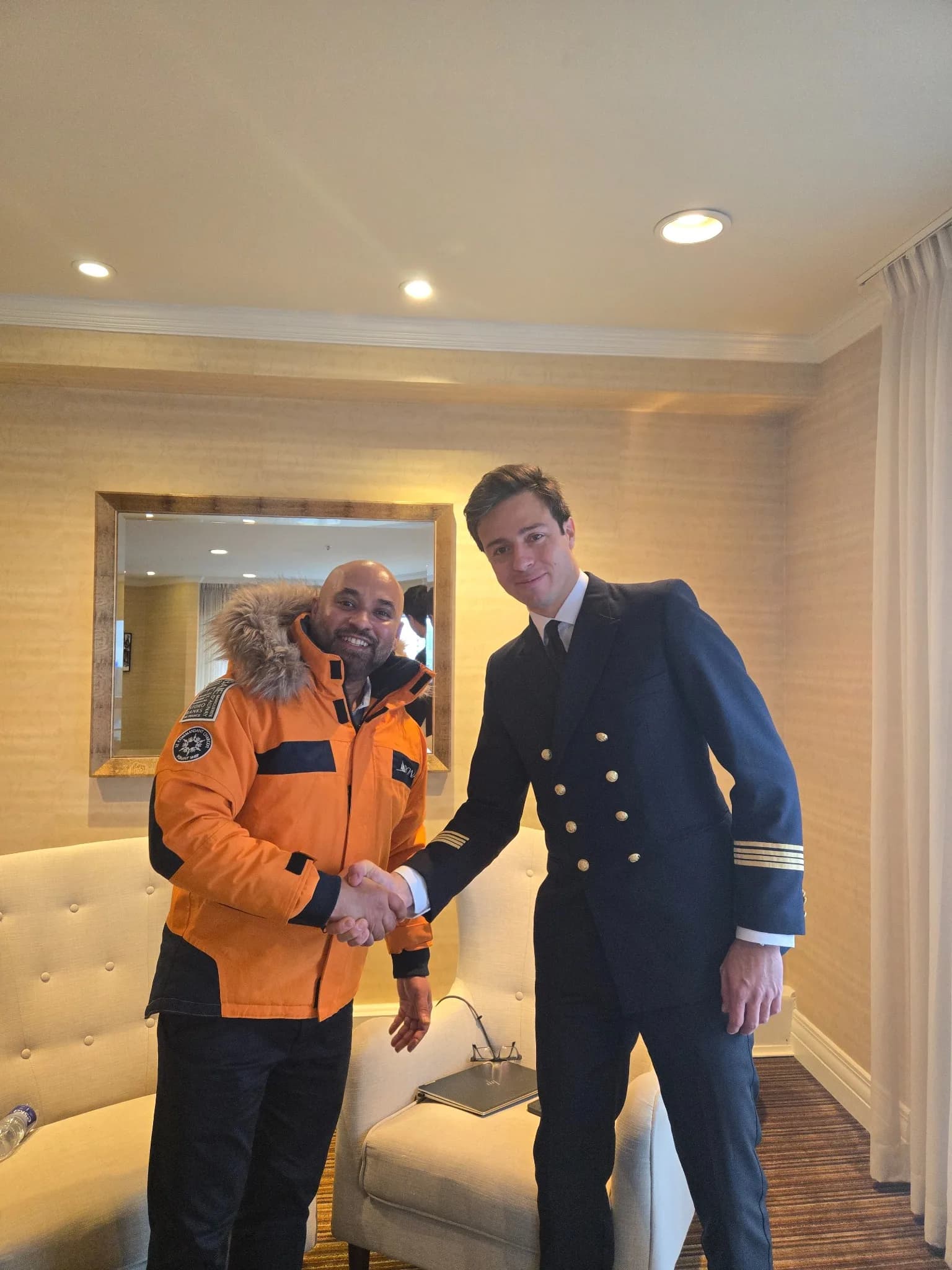
While promoting North Pole departures aboard Le Commandant Charcot, I travelled to Montreal to meet privately with the Captain. The objective was to understand the vessel, the North Pole experience, and the factors that make this one of the world's most exclusive expeditions — and to capture market-specific insights for clients in Japan, Singapore, and India.
The spirit of a Ponant expedition
The Captain explained that Ponant's philosophy begins with intimacy and personalisation. Small ships, exceptional guest-to-crew ratios, and genuine human connection create a distinctive style of exploration. As he put it: emotions are the drive; passion is the fuel.
Guests see a seamless experience, but behind the scenes the expedition team constantly develops multiple plans. Flexibility is possible because operations are exceptionally well organised.
Building Le Commandant Charcot
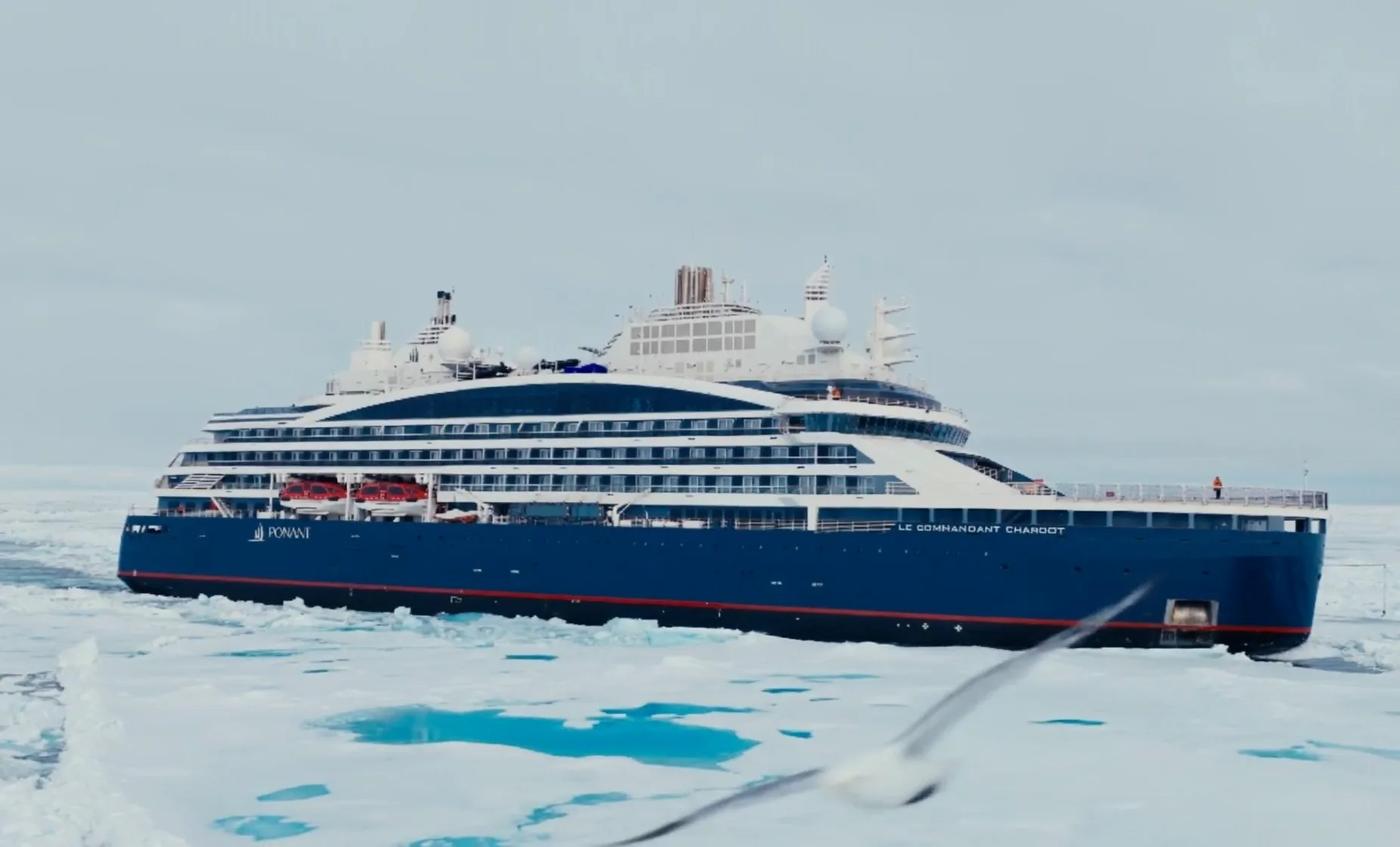
Three principles guided the project: environmental responsibility, safety, and luxury. The ship became the first LNG-powered luxury icebreaker and underwent extensive testing before welcoming guests.
According to the Captain, the vessel is not one step above conventional expedition ships — it is eight or nine steps up. As the most powerful non-nuclear luxury icebreaker in operation, it occupies a category of its own.
Reaching 90° North
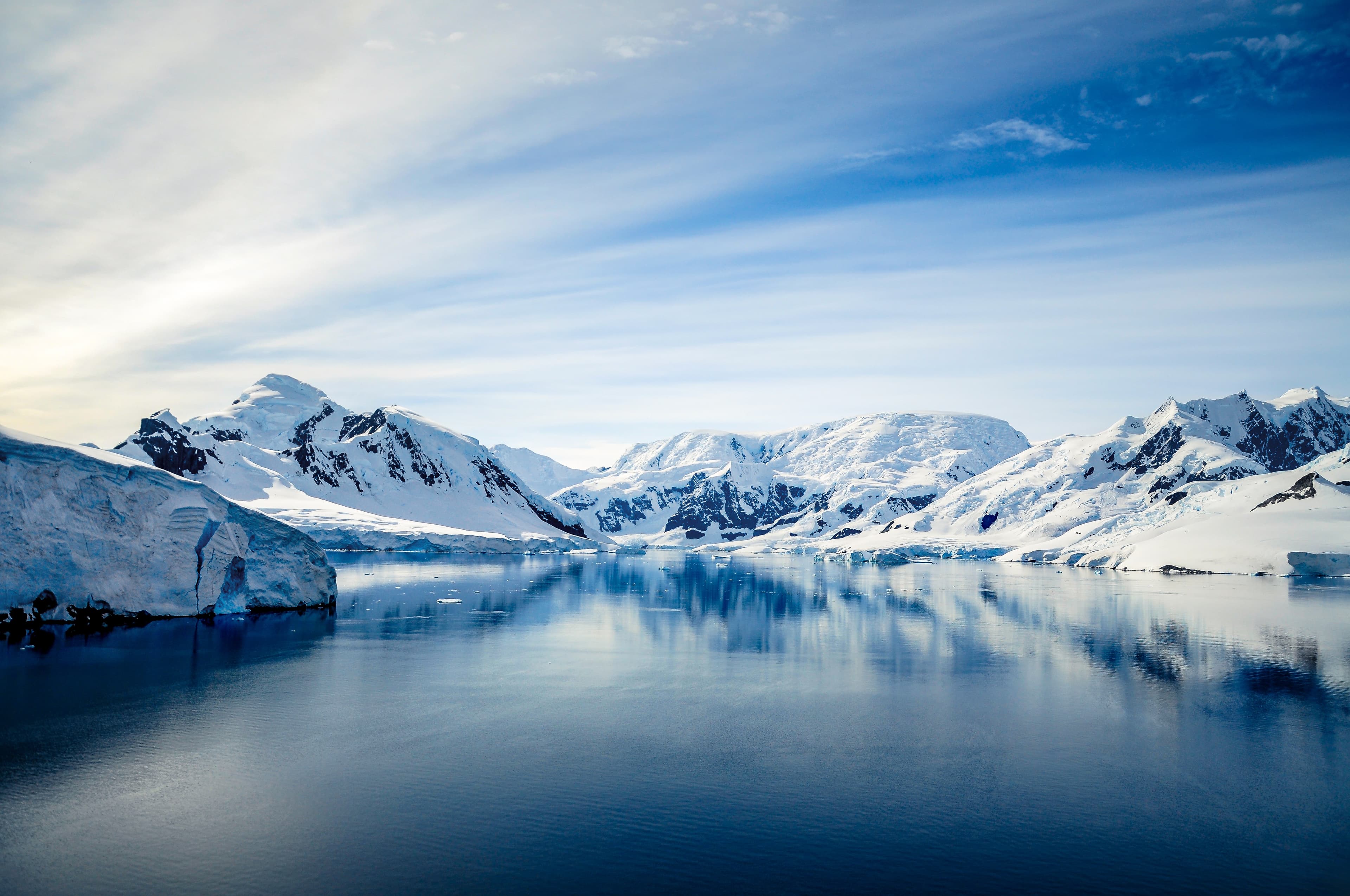
One of the most emotional moments occurs when the vessel reaches the Geographic North Pole. Guests and crew celebrate together, often stepping onto the ice itself for photographs, champagne, and caviar.
It is the moment the voyage has been building toward — but, as the Captain was careful to emphasise, it is not the whole story.
What guests underestimate
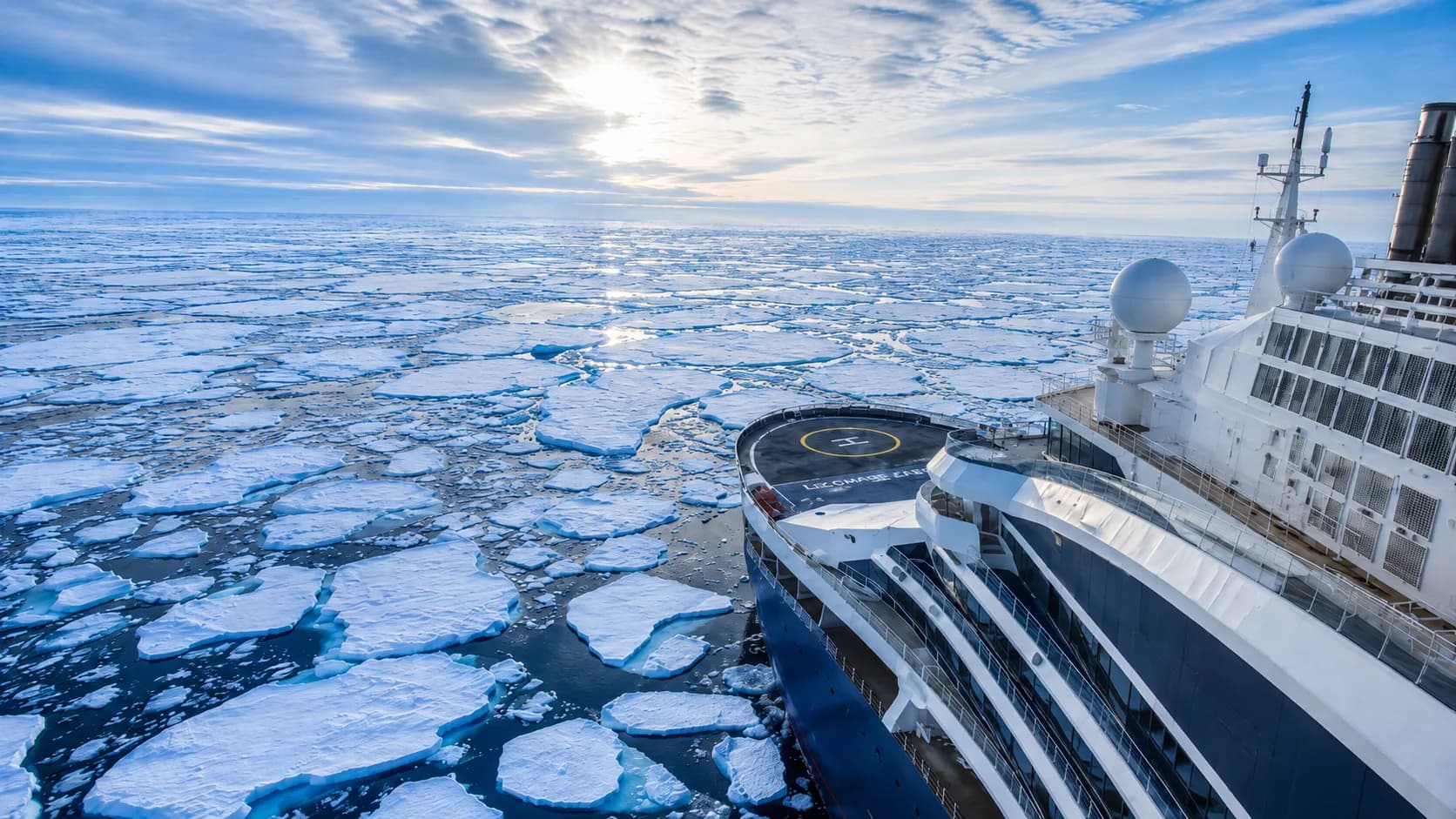
The journey is not merely about reaching a point on a map. The changing ice, wildlife, light, and atmosphere create a constantly evolving experience. The Captain described the ice as a living form — shifting, sculptural, and never the same twice.
Polar bears, seals, walrus, and seabirds are regularly encountered. One memorable story involved dozens of polar bears gathered around a whale carcass. They are the kings, he said. We are just guests.
Why travel to the North Pole?
The Captain encouraged travellers to think beyond luxury and focus on perspective. Reaching the top of the world provides a deeper appreciation of our planet and humanity's place within it.
When I asked what comes after the North Pole, his answer was immediate: space. For now, this remains one of the few journeys on Earth that still feels like standing at the edge of what is possible.
7C is pleased to promote a limited allocation aboard Le Commandant Charcot for future North Pole departures. If the Geographic North Pole is on your list, this conversation is the beginning of a proper briefing — not the end of one.
Working through these decisions?
Ask us your shortlist.